15 Must-Have Features for a Sustainable Tiny Home in 2026
The Sustainable tiny home is gaining remarkable popularity as an eco-friendly and cost-effective housing solution for those looking to minimize their environmental impact. On a per capita basis, these compact dwellings typically consume only about 60% of the energy used by larger, traditional homes.
We at Instant Living have watched this trend grow across Australia, where eco-conscious homeowners are increasingly seeking a sustainable tiny home for sale that don’t compromise on comfort or style. From a self-sustainable tiny home equipped with solar panels—the backbone of any off-grid setup—to designs incorporating sustainable materials for tiny homes, the options are expanding rapidly. Additionally, features like double-glazed windows, energy-efficient appliances, and high-quality insulation ensure these compact spaces remain cost-effective to run.
The best sustainable tiny home combines innovative design with practical functionality, typically ranging from 100 to 400 square feet. Throughout this article, we’ll explore 15 essential features that will define a sustainable tiny home in Australia and beyond for 2026, helping you embrace minimalism while reducing your carbon footprint.
Solar Power Systems
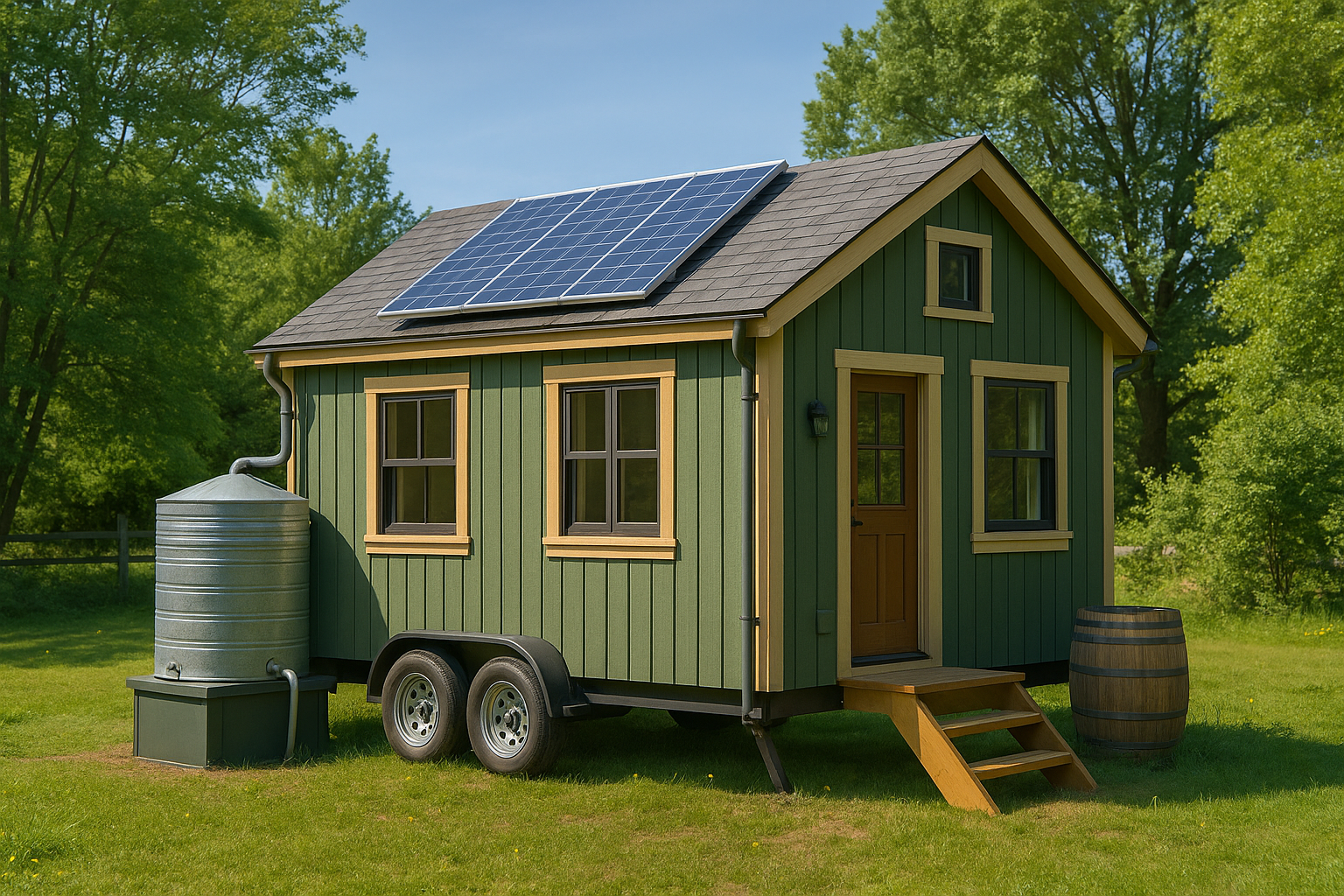
Solar power has become the cornerstone of energy independence for tiny homes, offering a perfect solution for properties with limited space and environmental consciousness. At Instant Living, we’ve seen first-hand how harnessing the sun’s energy allows tiny home dwellers to dramatically reduce utility bills while maintaining modern comforts.
Solar Power Systems Overview
The foundation of any self-sustainable tiny home begins with properly sized solar equipment. Tiny houses typically consume only 2-8 kilowatt-hours (kWh) of electricity daily—a fraction of what conventional homes use. A complete solar power system consists of solar panels, inverters to convert DC to AC electricity, charge controllers to regulate power flow, and batteries for energy storage.
For most tiny homes, a system with 5-10 panels can generate sufficient power, depending on your energy requirements and location. Monocrystalline panels are particularly well-suited for tiny homes due to their higher efficiency ratings (up to 25%) and compact size, making them ideal for limited roof space.
Benefits of Solar Power Systems
The advantages of incorporating solar power into a sustainable tiny home extend beyond environmental considerations. First and foremost, solar significantly reduces or eliminates electricity bills. As on-grid electricity rates continue to rise, this cost-saving benefit becomes increasingly valuable.
Furthermore, solar power grants true independence from the grid, protecting you from power outages during storms or natural disasters. For those seeking the best sustainable tiny home with mobility features, solar energy allows you to bring modern conveniences to remote locations.
Property value is another consideration—a sustainable tiny home for sale with renewable energy systems typically command higher prices as buyers recognize the long-term benefits of free, clean energy.
How to Implement Solar Power Systems
Implementing solar begins with calculating your energy requirements. List all appliances and their daily consumption to determine your total power needs. For example, if your daily usage is approximately 3,000 watt-hours and a single 300-watt panel captures sunlight for 8 hours, you would need at least 2-3 panels to meet your basic requirements.
Installation involves several key steps:
- Choose appropriate panels (rigid for fixed locations, flexible for mobile tiny homes)
- Select proper mounting (roof or ground-based systems)
- Connect components (panels to charge controller to batteries to inverter)
- Test the system thoroughly before relying on it
For a sustainable tiny home in Australia, positioning panels to receive maximum sunlight is crucial for optimizing energy production. Professional installation might be advisable for those new to solar energy to ensure safety and efficiency.

Composting Toilets
Composting toilets have revolutionized waste management in sustainable tiny homes by offering an elegant solution without requiring water or complex plumbing. At Instant Living, we’ve observed many clients initially hesitant about these systems quickly become enthusiastic advocates after understanding their operation and benefits.
Composting Toilets Explained
Composting toilets are waterless systems that transform human waste into nutrient-rich compost through natural biological processes. Most modern designs separate liquid and solid waste, which is crucial for effective composting and odour control. Three main types exist: continuous composting (single container with ongoing decomposition), batch composting (alternating containers for better maturation), and self-contained units (compact systems with built-in heating elements for smaller spaces).
Benefits of Composting Toilets
The advantages of installing composting toilets in a sustainable tiny home extend beyond environmental considerations:
- Water Conservation: They save approximately 6,600 gallons (24,984 litres) of water per person annually
- Off-Grid Freedom: No connections to sewage systems or septic tanks required—perfect for remote locations
- Cost Effectiveness: Installation costs are typically AUD 1,528-3,057 compared to AUD 22,934-38,224 for traditional septic systems
- Space Efficiency: Compact designs fit perfectly within the limited dimensions of a sustainable tiny home Australia-wide
- Odor-Free Operation: Proper ventilation and separation systems ensure no unpleasant smells
How to Use Composting Toilets
Maintaining a composting toilet is straightforward yet requires attention to detail. After each use, add a small amount of carbon-based bulking material such as sawdust, wood shavings, or coconut coir. This helps regulate moisture, creates airflow, and facilitates decomposition.
Regular maintenance involves emptying the liquid container every 1-3 days and the solids chamber every few weeks to months, depending on usage. Subsequently, the collected compost must mature for at least six months before use. For safety, always use protective gloves when handling compost and only use the end product for non-edible plants or bury it 10cm below soil.
Throughout our experience with sustainable tiny homes for sale, we’ve found composting toilets to be remarkably reliable when properly maintained, offering an elegant solution to waste management challenges.
Rainwater Harvesting Systems
Rainwater harvesting represents a cornerstone feature for a self-sustainable tiny home, enabling owners to collect, store, and utilize nature’s free water resource. At Instant Living, we’ve seen first-hand how this feature transforms the sustainability profile of compact dwellings across Australia.
Rainwater Harvesting Basics
Rainwater harvesting is essentially the collection of water from roof surfaces into storage containers. A complete system consists of several key components: the roof and gutters as the collection surface, downpipes with leaf-shedding rain-heads, first flush diverters to remove initial contaminated runoff, storage tanks, and a supply system that may include pumps and filters.
For a sustainable tiny home, these systems can be remarkably efficient—depending on tank size and climate, mains water usage can be reduced by up to 100%. The collected water can serve multiple purposes from garden irrigation to toilet flushing, laundry, and even drinking water when properly filtered.
Advantages of Rainwater Harvesting
The benefits of incorporating rainwater harvesting into a sustainable tiny home Australia-wide are substantial:
- Reduced Utility Costs: Significant savings on water bills by using free rainwater
- Environmental Impact: Decreases stormwater runoff, thereby helping reduce local flooding
- Independence: Provides a reliable water source during restrictions or in remote locations
- Plant Health: Rainwater is free from chemicals like chlorine, making it ideal for gardens
- Space Efficiency: Modern tanks like slimline models are designed specifically for tight spaces
Installing Rainwater Harvesting Systems
For tiny homes with limited space, slimline tanks offer an ideal solution—they’re narrow (some starting at 625mm wide) yet can store thousands of litters. Moreover, underdeck tanks can be fitted beneath existing decking, perfect even for homes with small courtyards.
Installation should begin with calculating your water needs and selecting appropriately sized tanks. Consequently, you’ll need proper filtration—including 1mm gutter screening mesh, leaf-shedding rain-heads, and progressive filters (20-micron, 5-micron, and 1-micron) for drinking water.
Maintenance is straightforward but essential: clean gutters, screens, and first flush diverters monthly, and check filters annually. Primarily, this ensures your water remains clean and your system functions efficiently for years to come.
Reclaimed and Recycled Materials
Reclaimed and recycled materials embody circular economy principles in tiny home construction, offering both environmental benefits and unique aesthetic character. At Instant Living, we’ve witnessed how these materials can transform a sustainable tiny home into personalized spaces with rich stories and minimal environmental impact.
What Are Reclaimed and Recycled Materials
Reclaimed and recycled materials are repurposed components from previous structures or manufacturing waste given new life in construction projects. These include reclaimed wood from old barns, factories, or shipping pallets; recycled steel that maintains its strength despite being reprocessed; repurposed glass from post-consumer waste; and recycled plastic converted into building elements.
Unlike virgin materials, these alternatives have already served a purpose and would otherwise end up in landfills. Indeed, each save BOARD product purchased saves 25kg of packaging waste from disposal. They represent a shift from the traditional “build, demolish, replace” cycle toward a more thoughtful approach to construction resources.
Why Use Reclaimed and Recycled Materials
The advantages of incorporating these materials into a sustainable tiny home extend beyond environmental considerations:
- Environmental Impact: Reduces landfill waste and conserves raw resources. Recycling 1 ton of scrap steel keeps 4.3 tons of CO₂ out of the atmosphere.
- Cost Efficiency: Often 20-40% less expensive than new materials, with additional savings on disposal fees.
- Unique Aesthetics: Each piece carries history and character impossible to replicate with new materials.
- Energy Conservation: Requires less energy than manufacturing from scratch—recycling steel uses 75% less energy than new production.
- Local Economy Support: Often sourced locally, shortening supply chains and reducing transportation emissions.
Furthermore, many recycled materials exhibit superior performance characteristics—recycled steel, notably, maintains its strength and durability regardless of how many times it’s reprocessed.
Sourcing and Using Reclaimed Materials
Finding quality reclaimed materials requires some detective work. Accordingly, we recommend exploring:
- Specialized salvage yards and reclamation centres
- Online marketplaces and community exchange platforms
- Local demolition projects (with permission)
- Manufacturing facilities with usable by-products
When implementing these materials, safety remains paramount. Always inspect reclaimed items for hazardous substances like asbestos or lead, especially in older materials. Preparation typically involves cleaning, de-nailing, and treating to enhance durability.
For structural applications, ensure materials meet building code requirements. Fortunately, many options like recycled steel are equally strong as virgin materials. Meanwhile, reclaimed wood often proves more durable than new lumber, having already weathered environmental conditions.
Sustainable Wood Options
Wood remains the backbone of tiny home construction, with sustainable options offering both ecological benefits and practical advantages. At Instant Living, we’ve seen how the right timber choices can dramatically enhance sustainability while providing warmth and character to compact living spaces.
Types of Sustainable Wood
Several excellent sustainable wood options exist for tiny home builders:
- Bamboo – Grows incredibly fast and can be harvested frequently without deforestation. Its rapid growth cycle makes it highly renewable and helps reduce pressure on hardwood forests.
- Reclaimed Wood – Salvaged from old buildings, barns, and shipping pallets. Each piece tells a unique story through its grain patterns, textures, and natural aging.
- Accoya – Modified timber known for exceptional durability and resistance to decay, requiring less frequent treatment.
- Plantation-Grown Hardwoods – Ethically sourced from managed forests where replanting ensures continuous supply. Options like eucalyptus and teak offer durability and beauty.
Benefits of Sustainable Wood
Sustainable timber provides numerous advantages for a self-sustainable tiny home. First, it actively helps combat climate change—trees absorb carbon dioxide, and when harvested responsibly, timber continues storing carbon throughout its lifespan.
Remarkably, wood requires 24 times less energy to produce than steel, significantly reducing carbon emissions. Beyond environmental benefits, sustainable wood offers exceptional practical qualities—it’s naturally strong yet lightweight, making it ideal for mobile tiny homes.
From our experience constructing sustainable tiny homes Australia-wide, we’ve observed that wood creates healthier living environments. It regulates humidity naturally, “breathes” to control indoor air quality, and even reduces stress through its natural aesthetic.
How to Choose Sustainable Wood
When selecting sustainable timber, certification is paramount. Look for FSC (Forest Stewardship Council) or PEFC (Program for the Endorsement of Forest Certification) labels that guarantee responsible sourcing. These certifications ensure forests are managed to preserve biodiversity and support local communities.
Consider the entire lifecycle—some woods require less maintenance, saving resources over time. For instance, thermowood products can last up to 30 years with minimal treatment.
Ask suppliers direct questions about timber origins. Trustworthy vendors willingly share information about harvesting practices and sustainability credentials. Consider local options first, as this reduces transportation emissions and supports regional economies.
Energy-Efficient Insulation
Proper insulation serves as the unsung hero of a sustainable tiny home, creating a thermal envelope that minimizes energy consumption while maximizing comfort. At Instant Living, we’ve found that insulation makes the difference between a truly efficient home and one that wastes precious resources.
What Is Energy-Efficient Insulation
Energy-efficient insulation acts as a barrier to heat flow, slowing or preventing the transfer of thermal energy through walls, floors, and roofs. It comes in two primary types: bulk insulation that affects conduction heat flow and reflective foil that primarily affects radiation heat flow. The performance of any insulation is measured by its R-value—the higher the R-value, the greater the resistance to heat transfer and the better the insulating effect.
Why It Matters in Tiny Homes
In compact living spaces, insulation becomes even more critical. Primarily, tiny homes with proper insulation maintain stable interior temperatures despite external fluctuations, reducing heating and cooling requirements by up to 15%. Throughout our experience building a self-sustainable tiny home, we’ve observed that well-insulated tiny houses require significantly less energy for climate control—typically only 2-8 kWh daily compared to conventional homes.
Beyond energy savings, quality insulation creates a quieter, healthier living environment by reducing noise transmission and controlling moisture that can lead to mould growth.
Best Insulation Materials for Tiny Homes
For tiny homes where space is limited, high R-value per inch materials are essential:
- Spray Foam (closed cell): Offers R-values of 3.8-6.3 per inch and excellently seals odd-shaped cavities
- Rigid Foam Boards: Provide R-values up to 5.5, making them ideal for walls, floors, and cathedral ceilings
- Sheep’s Wool: A sustainable option that naturally regulates humidity and offers sound dampening properties
- Fiberglass: Common and accessible with R-values of 2.2-3.8 per inch
Overall, selecting insulation with appropriate R-values for your climate zone is crucial for creating an energy-efficient, comfortable tiny living space.
LED Lighting and Smart Controls
Upgrading to LED lighting transforms energy consumption patterns in a sustainable tiny home, offering remarkable efficiency alongside smart control options. At Instant Living, we’ve integrated these technologies into our builds to maximize both sustainability and comfort.
LED Lighting in Tiny Homes
LED lights are the perfect match for a self-sustainable tiny home as they use up to 80% less electricity than traditional halogen bulbs. Firstly, their compact size works wonderfully in limited spaces while providing versatile lighting options—from strip lights under cabinets to warm-toned bulbs for ambient lighting. With a lifespan of up to 25,000 hours, LEDs require far fewer replacements than conventional bulbs, making them ideal for sustainable tiny homes Australia-wide.
Benefits of Smart Lighting
Smart lighting systems elevate tiny home living through automation, customization, and energy conservation. These systems offer:
- Remote control via smartphone apps or voice assistants
- Customizable brightness and colour settings
- Automatic scheduling to align with daily routines
- Motion sensors that activate lights only when needed
In fact, smart lighting with motion detection in high-traffic areas can substantially reduce energy consumption by ensuring lights operate only when necessary. Naturally, this technology also helps create different moods—bright for food preparation or softer for relaxation.
How to Install LED and Smart Lighting
When installing smart lighting in a sustainable tiny home, consider layering different light types as groups rather than controlling every light independently. Typically, this creates better outcomes from both cost and performance perspectives. Furthermore, consider using dimmable LED bulbs with smart controls to adjust brightness according to time of day or current activity. However, remember that smart bulbs consume power in standby mode, so look for options using 0.5W or less when inactive.
Multi-Functional Furniture
Multi-functional furniture stands as the backbone of space optimization in a sustainable tiny home. At Instant Living, we’ve found that clever furniture solutions can effectively double your usable space without increasing your home’s footprint.
What Is Multi-Functional Furniture
Multi-functional furniture serves multiple purposes through innovative design. These transformable pieces adapt to different needs throughout the day, eliminating the need for separate, single-purpose items. Think of furniture that changes form—a sofa that becomes a bed, a coffee table that expands into a dining surface, or an ottoman hiding valuable storage space. Many designs now incorporate smart mechanisms like fold-down components, nested elements, and modular sections that can be reconfigured as needed.
Why It’s Ideal for Tiny Homes
In compact spaces where every square inch counts, multi-functional furniture offers several advantages. Primarily, these pieces maximize usability without compromising comfort. A well-designed tiny home with transformable furniture can feel spacious despite its limited dimensions. Financially, these items prove cost-effective as one versatile piece eliminates the need to purchase multiple single-purpose items. Beyond space considerations, these furnishings promote organization through built-in storage compartments that keep essentials hidden yet accessible.
Examples and Implementation Tips
Several multi-functional options work exceptionally well a sustainable tiny home:
- Convertible sofa beds that provide seating by day and sleeping space by night
- Expandable dining tables that adjust based on your needs
- Storage ottomans serving as footrests, extra seating, and hidden storage
- Wall-mounted fold-down desks that disappear when not in use
- Murphy beds with built-in shelving or desks
When implementing these solutions, prioritize quality over quantity, as investing in well-crafted pieces ensures longevity. Consider traffic flow—position transformable furniture where it has space to expand without obstruction.
Natural Lighting and Ventilation
Bright, airy spaces enhance the liveability of a sustainable tiny home in ways that transcend mere aesthetics. At Instant Living, we consider thoughtful natural lighting and ventilation design fundamental to creating healthy, energy-efficient small dwellings.
Importance of Natural Lighting
Natural light profoundly impacts how tiny spaces feel and function. Primarily, well-lit homes appear larger and more inviting. Beyond visual appeal, proper daylight improves mood, supports well-being, and significantly reduces reliance on artificial lighting. Strategically designed natural lighting simultaneously creates pleasant living environments while cutting electricity costs.
Ventilation Strategies
Proper ventilation maintains good indoor air quality by increasing oxygen levels plus diluting and displacing pollutants. For tiny homes, effective approaches include:
- Natural ventilation through strategically placed windows and doors
- Mechanical ventilation via fans or heat recovery systems
- Combined approaches that utilize both methods
Positioning windows on opposite walls creates pressure differentials that encourage airflow even on still days.
Design Tips for Light and Airflow
Effective implementation starts with orienting living areas to capture optimal sunlight. Installing large windows, glass doors, or skylights brings daylight deeper into interiors. Skylights provide three times more light than conventional vertical windows of the same size, making them exceptionally efficient for tiny homes. Yet, consider including adjustable shading devices to regulate light and prevent overheating. Alternatively, creating connected living spaces encourages free air movement between rooms.
Greywater Recycling Systems
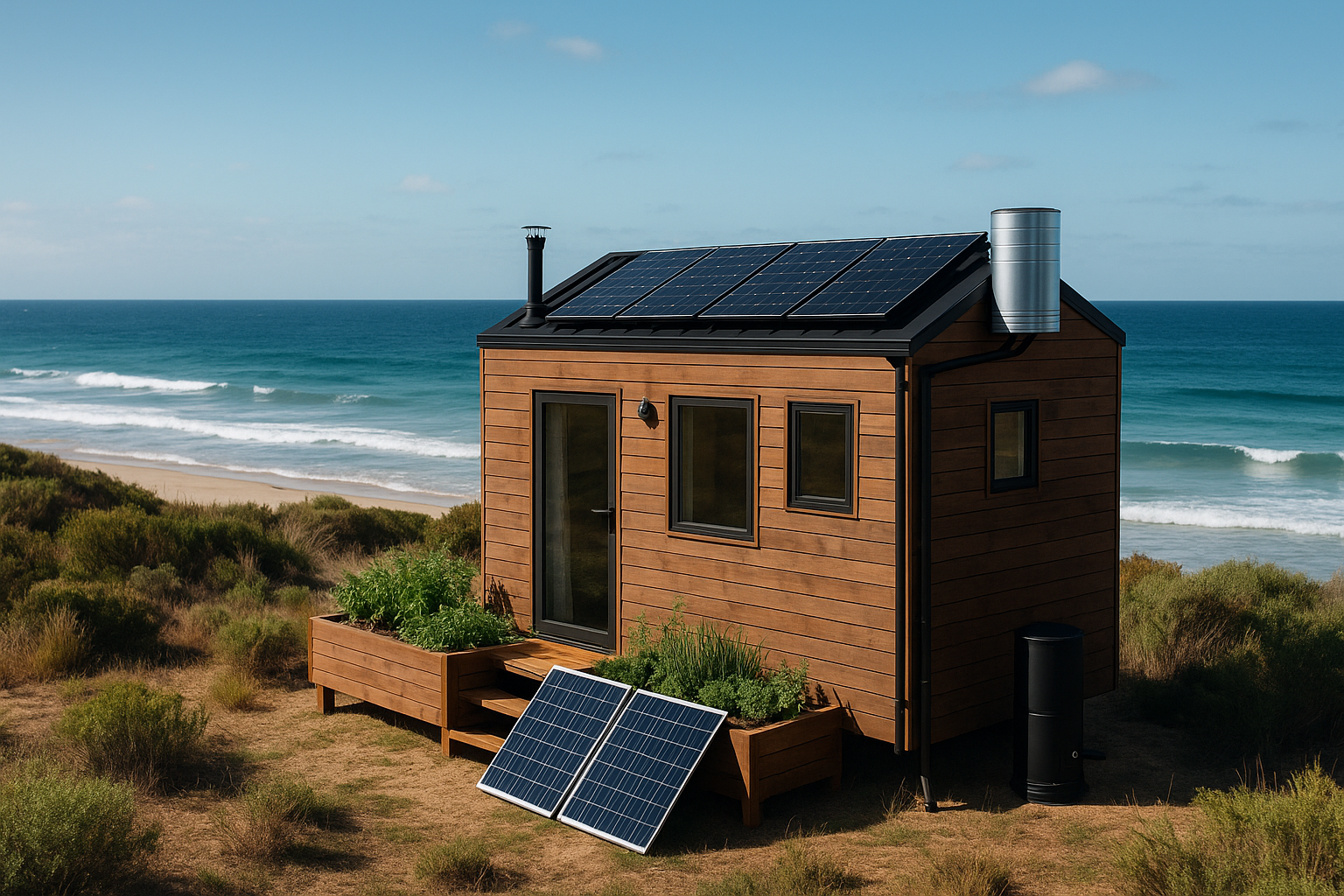
Greywater recycling offers a smart water management solution for a sustainable tiny home. At Instant Living, we’ve seen this system transform water efficiency in compact dwellings.
What Is Greywater Recycling
Greywater is used water from showers, sinks, and laundry—notably cleaner than blackwater from toilets. This lightly used water might contain soap, hair, household products, and oils. Although not suitable for drinking, properly managed greywater becomes a valuable resource instead of waste.
Benefits of Greywater Systems
Implementing greywater systems in a sustainable tiny home Australia-wide provides numerous advantages:
- Water Conservation: Typical tiny homes can save thousands of gallons annually through recycling
- Freedom of Location: Eliminates need for traditional sewerage access
- Economic Savings: Reduces water bills by up to 50%
- Space Efficiency: Many systems are designed specifically for tiny spaces, some as compact as 60cm tall
- Garden Benefits: Provides nutrient-rich water for plants
How to Set Up Greywater Recycling
Setting up involves separating greywater from blackwater, installing filtration to remove particles, then connecting to storage and distribution systems. For sustainability, use biodegradable soaps since harsh chemicals can harm plants.
Basic systems include diversion devices that direct water to gardens without treatment. More advanced treatment systems allow wider usage, including toilet flushing.
Maintenance remains straightforward—clean filters regularly, check storage tanks for leaks, plus ensure systems have overflow connections to handle excess water.
Off-Grid Kitchen Setup
Creating a functional kitchen without traditional utilities represents the heart of self-sufficiency in tiny home living. At Instant Living, we’ve discovered that well-designed off-grid kitchens combine simplicity with innovation to deliver comfort without compromise.
What Is an Off-Grid Kitchen
An off-grid kitchen operates completely independent of municipal utilities, functioning without traditional electricity or water connections. At its core, these kitchens incorporate propane or wood-burning stoves for cooking, solar-powered refrigerators, plus manual appliances like hand-cranked blenders. The fundamental principle behind these spaces is keeping everything simple yet efficient, thereby reducing both energy consumption and water usage.
Why It’s Essential
Off-grid kitchens provide genuine independence from unreliable power sources, making them crucial for a sustainable tiny home located beyond utility connections. These setups ensure you can prepare meals regardless of your location—whether nestled in remote bushland or traveling between destinations. Throughout our experience with sustainable tiny homes Australia-wide, we’ve found that off-grid kitchens typically form the centrepiece of truly self-sufficient living.
Appliances and Layout Tips
For cooking, propane stoves offer excellent temperature control with high energy density, making them ideal for off-grid settings. Wood-burning stoves serve dual purposes as both cooking surfaces and heating sources. Consider incorporating energy-efficient small appliances like slow cookers, air fryers, or microwaves as they consume less power than conventional ovens.
Solar refrigeration represents a cornerstone of a sustainable tiny home, with models designed to run on minimal power while maintaining consistent cooling. For water needs, filtered rainwater or tank-stored water works perfectly for cooking and cleaning. Hence, within compact spaces, prioritize multi-level storage solutions and foldable workspaces to maximize functionality without sacrificing movement.
Wood-Burning or Biofuel Stoves
Wood-burning and biofuel stoves add traditional charm to sustainable tiny homes while serving as effective off-grid heating solutions. At Instant Living, we’ve found these eco-friendly options create a focal point that transforms the tiny living experience with their warm ambiance.
Types of Eco-Friendly Stoves
Several heating alternatives exist for compact spaces. Wood-burning stoves produce significant heat relative to their size, making them ideal for tiny home dimensions. Pellet heating systems utilize compressed wood or biomass pellets made from waste materials like sawdust. Ethanol fireplaces operate on bioethanol—a renewable fuel derived from fermented vegetables and grains. These modern units require no chimney or flue, making installation remarkably straightforward.
Benefits of Wood-Burning Stoves
The appeal of wood stoves extends beyond aesthetics. Primarily, they rely on renewable resources, eliminating fossil fuel dependence. Wood remains cost-effective compared to alternative heating systems. Plus, many models can serve multiple functions—providing heat, cooking capabilities, and even hot water when fitted with boiler options.
Installation and Safety Tips
Proper installation demands precision. Naturally, stoves must be secured adequately for transit in mobile tiny homes. Effective flue systems act as the “engine” of your wood stove, with height and insulation affecting draw efficiency. Always incorporate smoke and carbon monoxide alarms alongside fire safety equipment. Appropriate shielding materials must protect adjacent combustible elements.
Sustainable Tiny Home Design Layouts
The intelligent layout of sustainable tiny homes forms the crucial foundation upon which all other eco-friendly features depend. At Instant Living, we’ve discovered that thoughtful spatial planning can make a 200-square-foot dwelling feel surprisingly spacious and comfortable.
Designing for Efficiency
Effective tiny home design begins with strategic spatial planning that utilizes every square inch. Open-concept layouts create uninterrupted sight lines from kitchen to living area, making compact spaces feel significantly larger. Fundamentally, vertical space optimization through lofts transforms otherwise unused areas into functional zones for sleeping, storage, or work. For roadworthy designs, remember to maintain size restrictions—width 2.5m, height 4.3m, length 19m—and keep weight under 4.5 tons.
Why Layout Matters
A well-designed layout profoundly impacts both functionality and perceived spaciousness. In essence, proper spatial planning reduces visual clutter, creates better traffic flow, and enhances adaptability. Open floor plans enable multipurpose use—the same space serves for dining, entertaining, and working. Beyond that, thoughtful design facilitates natural light distribution, improving both aesthetics and energy efficiency.
Tips for Smart Layouts
To maximize your tiny home’s potential:
- Incorporate multi-functional furniture like fold-down tables and convertible sofa beds
- Position windows strategically to capture morning and afternoon light
- Utilize under-stairs space, floor compartments, and wall cavities for storage
- Design kitchen layouts with pull-out pantries and vertical cabinets
- Create visual zoning through rugs or subtle wall colour changes rather than physical barriers
- Install pocket doors that disappear into walls instead of swing doors that consume floor space
Eco-Friendly Roofing Materials
Roofing choices play a crucial role in the overall sustainability of tiny homes. At Instant Living, we’ve explored numerous options to maximize both environmental benefits and practical functionality.
Types of Sustainable Roofing
Recycled metal roofing stands out as highly durable and fully recyclable, making it perfect for sustainable tiny homes. Similarly, recycled shingles made from reclaimed rubber or plastics offer excellent weather resistance while diverting materials from landfills. Living green roofs represent another innovative option—these vegetation-covered surfaces improve insulation while creating habitats for wildlife. For energy generation, solar tiles seamlessly integrate photovoltaic cells into the roof structure.
Benefits of Eco Roofing
Beyond environmental considerations, eco-friendly roofs provide tangible advantages. Primarily, they offer exceptional insulation properties, reducing heating and cooling costs. Throughout their lifespan, materials like clay tiles maintain superior air quality by avoiding toxic residues. Many sustainable options boast longer durability, meaning fewer replacements and less waste. Green roofs naturally cool surrounding air by 3.6-11.3°C, with greater effects in warmer climates.
Choosing the Right Roof
Weight considerations remain paramount for tiny homes—lighter materials like recycled composite shingles work well for mobile structures. Naturally, climate factors should guide your selection, as reflective coatings perform better in warmer regions. Above all, ensure your roof structure can support your chosen material, particularly for heavier options like green roofs.
Tiny Home Mobility Features
Mobility represents one of the most distinctive advantages of sustainable tiny homes, offering freedom that traditional housing simply cannot match. At Instant Living, we’ve helped countless clients embrace the nomadic lifestyle potential that comes with properly designed mobile dwellings.
What Are Mobility Features
Mobility features include the structural elements that make tiny homes transportable. Primarily, these include trailer foundations that allow your home to be towed, proper weight distribution systems, and secure fastening for all fixtures during transit. Many tiny homes are classified as caravans rather than permanent structures, freeing them from council approvals and development restrictions.
Why Mobility Matters
The capacity to relocate provides unmatched flexibility for tiny home dwellers. Naturally, this allows you to change locations without selling your property—perfect for those seeking seasonal changes or new job opportunities. Furthermore, mobility permits access to different environments from beaches to mountains, all while maintaining the comfort of your home. This transportability creates significant financial benefits through reduced moving costs and freedom from traditional real estate commitments.
How to Make Your Tiny Home Mobile
To ensure safe mobility, your tiny home must meet specific requirements. Therefore, select appropriate trailers with flatbed designs, dual axles for weight distribution, and reliable braking systems. Additionally, maintain proper road compliance by keeping within size restrictions—maximum height 4.3m, width 2.5m, and length 9m. Prior to transport, secure all interior fixtures and check that lights and brakes function correctly.
Conclusion
Sustainable tiny homes represent a remarkable shift toward mindful living without sacrificing comfort or functionality. Throughout this article, we at Instant Living have explored the 15 essential features that will define these eco-conscious dwellings in 2026. From solar power systems that provide energy independence to innovative multi-functional furniture that maximizes limited space, these elements work together to create truly self-sufficient homes.
The beauty of sustainable tiny living lies not only in its reduced environmental footprint but also its practical advantages. Energy-efficient insulation paired with natural lighting significantly cuts utility bills while creating healthier living environments. Likewise, water conservation systems such as rainwater harvesting and greywater recycling transform resource usage patterns, making tiny homes viable even in remote locations.
Undoubtedly, the materials used matter just as much as the systems installed. Reclaimed wood, recycled metal, and other repurposed materials bring character and history to these compact spaces while diverting waste from landfills. These choices reflect a deeper commitment to sustainability beyond mere energy efficiency.
The mobility features we’ve discussed offer another layer of freedom—the ability to change locations without abandoning your home investment. This flexibility stands among the most appealing aspects for many of our clients seeking alternatives to traditional housing.
We believe sustainable tiny homes will continue gaining popularity as more people recognize their viability as permanent residences. The combination of environmental benefits, cost savings, and lifestyle flexibility makes these compact dwellings an increasingly attractive option for conscious consumers.
After years of building sustainable tiny homes across Australia, we’ve witnessed first-hand how these small spaces can profoundly impact lives. They encourage intentional living, foster stronger connections with natural surroundings, and provide financial freedom through reduced expenses. The future of housing might indeed be tiny—but its positive impact promises to be anything but small.
Key Takeaways
These essential features will transform tiny homes into truly sustainable, self-sufficient living spaces that minimize environmental impact while maximizing comfort and functionality.
- Solar power systems with 5-10 panels can meet tiny home energy needs (2-8 kWh daily), providing independence and eliminating electricity bills • Composting toilets save 6,600 gallons of water annually per person while eliminating sewage connections for true off-grid living • Multi-functional furniture effectively doubles usable space—convertible sofa beds, expandable tables, and storage ottomans maximize every square inch • Rainwater harvesting and greywater recycling systems can reduce water bills by up to 50% while supporting complete water independence • Strategic design layouts with open concepts, vertical storage, and natural lighting make 200-square-foot spaces feel surprisingly spacious
The convergence of these sustainable technologies creates homes that are not only environmentally responsible but also financially liberating, offering a pathway to intentional living with minimal ecological footprint.
FAQs
Q1. What are the key sustainable features of tiny homes in 2026? Key sustainable features include solar power systems, composting toilets, rainwater harvesting, energy-efficient insulation, and multi-functional furniture. These elements work together to minimize environmental impact while maximizing comfort and efficiency in small spaces.
Q2. Are tiny homes still a popular housing option in 2026? Yes, tiny homes continue to grow in popularity. The global market for tiny homes is projected to keep expanding through 2033, as more people seek sustainable, cost-effective, and flexible living solutions.
Q3. How much does it typically cost to build a tiny home in 2026? While costs can vary widely depending on materials, features, and location, it’s possible to build a basic tiny home for around AUD 150,000. However, this budget may not include land costs, and prices can increase significantly with high-end sustainable features and custom designs.
Q4. What are the advantages of having mobility features in a tiny home? Mobility features allow tiny home owners to relocate without selling their property, offering flexibility for job changes or exploring different environments. This transportability can also lead to reduced moving costs and freedom from traditional real estate commitments.
Q5. How do tiny homes contribute to sustainable living practices? Tiny homes promote sustainable living by using fewer resources, consuming less energy, and generating minimal waste. They encourage mindful consumption, incorporate eco-friendly materials, and often utilize off-grid technologies, helping residents reduce their overall ecological footprint.
You may be interested in these articles
The Simple Guide to Off-Grid Internet: Perfect for Your Tiny House Adventure
Are tiny homes legal in Australia? The Truth About Building Laws [2025 Guide]
How to Build a Tiny House Solar System: A Step-by-Step Guide for Beginners
Sustainable Tiny Homes: The Ultimate Guide for Eco-Conscious Living
Zoning Laws for Tiny Homes in Australia: A Step-by-Step Guide
Talk to us about Finance.
If you are interest in move into a tiny home, make the move today, contact Instant Living.


